



Selling in Spring 2026? A Practical Checklist to Get Your Home and Your Move Ready

Dave Carbonell • 23 May 2026

Share this article

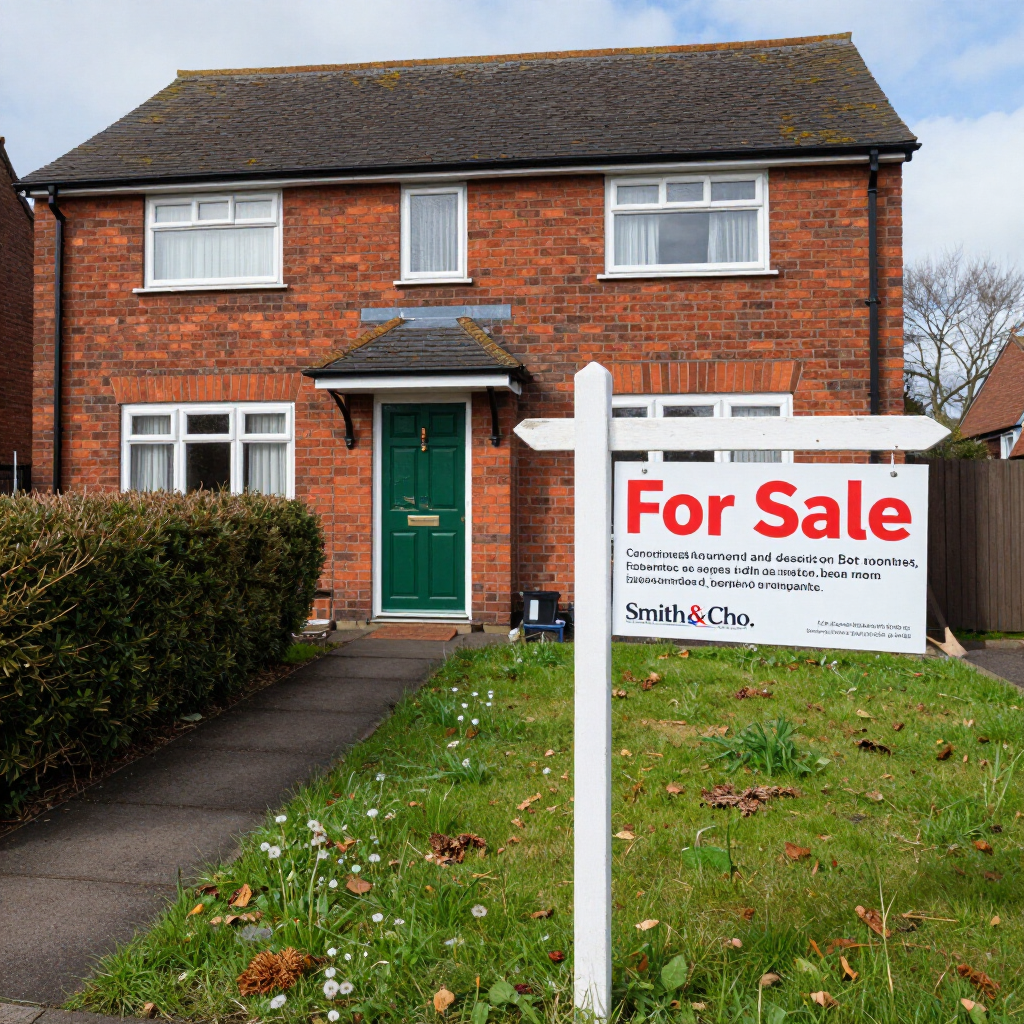
Freshly presented front of a family home for sale in spring with neat garden and sold sign in Fareham Hampshire

If you're thinking about selling this spring, now is the moment to get organised. Spring often brings more buyers back into the market, but it also brings more competing listings. Buyers have choice, and they tend to move fastest when a home looks well-presented and the sale feels straightforward.


It may feel slightly optimistic to be talking about spring at the end of February. Much of the UK has had a very wet start to 2026, and persistent rain makes it harder to picture bright photographs, neat outdoor spaces, and back-to-back viewings. The good news is that you can still make strong progress indoors and on the paperwork, so you're ready to act when the first decent spell arrives.


Plan Your Timings With a Sensible Buffer

Timescales vary depending on where in the UK you're selling, but it helps to know roughly what to expect before you list.

Region Typical Timescale From Offer to Completion
England and Wales Around five months on average, longer if part of a chain
Scotland Conveyancing typically eight to twelve weeks after offer accepted
Northern Ireland Usually six to ten weeks depending on circumstances

These are typical ranges rather than guarantees, but they're useful for setting expectations. If you have a deadline in mind, such as a school move or an onward purchase, build in a buffer from the start rather than hoping everything lines up neatly.

Make the Home Photograph Well, Because Most Decisions Start Online

Your first viewing is digital. Many buyers decide within seconds whether to even enquire, so the way your home looks in photographs matters more than most people realise.


Start with a proper declutter. Clear kitchen worktops, reduce excess furniture, and tidy hallways, bathrooms, and windowsills. Clutter makes rooms feel smaller and it photographs badly. If you're selling, you're moving anyway, so packing early is rarely wasted effort.


Then deal with the small faults that create doubt. Dripping taps, tired sealant, loose handles, sticking doors, scuffed paintwork, and blown bulbs are inexpensive to fix, but buyers notice them immediately. Those small issues also feed a bigger worry, which is whether there are hidden problems elsewhere.


Given the amount of rain the UK has had already in 2026, it's sensible to pay attention to anything that looks like moisture. Condensation, damp marks, and musty smells put buyers on alert. If you spot anything, it's usually better to investigate and address the cause early rather than hoping it gets overlooked at survey stage.


A deep clean is also worth doing properly. Focus on limescale, grout, extractor fans, skirting boards, ovens, and windows. A clean home feels well maintained, and that confidence matters to buyers.

Good to know: A clean, decluttered home doesn't just photograph better, it also tends to value better. Estate agents often flag presentation as one of the biggest factors in achieving asking price.

Improve Kerb Appeal Without Fighting the Weather

You don't need a show garden in February. You do need a cared-for entrance.


Sweep paths, tidy bins, clean the front door, and make the approach look simple and uncluttered. If the lawn is waterlogged, avoid forcing an early mow that tears up the ground. Keep edges tidy and add colour with pots or planters instead. Buyers will forgive a garden that isn't in full bloom. They're less forgiving of a frontage that looks neglected.

Get Your Paperwork Ready Before You List

Most delays start after the offer is accepted, not before. The simplest way to reduce avoidable hold-ups is to gather information early.


Before you market your home, you should be in a position to provide:

  • Tenure information and title details
  • Planning and building regulation paperwork where relevant
  • Guarantees or certificates for any work that's been carried out
  • A valid Energy Performance Certificate (EPC), which is a legal requirement before marketing a property for sale

Important: If your property is leasehold, start earlier than you think you need to. Leasehold transactions often require management packs, service charge details, ground rent information, buildings insurance, and details of any planned major works. These can take time to obtain and are a very common source of delays.

Couple reviewing mortgage and property sale paperwork at a kitchen table in Fareham Hampshire

Don't Leave the Mortgage Side Until the Last Moment

This is the part that often gets overlooked while people are focused on viewings and offers, but it's worth sorting early.


If you have a mortgage, check how much you owe and whether any early repayment charges apply. If you're also buying, think ahead about whether you'll need a new mortgage, additional borrowing, or a change to your existing arrangements.


Lenders will carry out affordability and credit checks for any new borrowing, so it's worth keeping your finances steady in the run-up to an application. Avoiding unnecessary new credit and sudden changes to your financial commitments can reduce the chance of extra questions at the worst possible time.


It's also sensible to budget for the full costs of moving, which often include legal fees, estate agent fees, removals, and the possibility of short-term overlap if completion dates don't line up perfectly.


  • If you're not sure where you stand with your mortgage, getting proper mortgage advice in Fareham early in the process can save a lot of stress later. A good adviser will help you understand your options before you're under pressure to act quickly.

Watch out: Avoid applying for new credit cards, loans, or finance agreements in the months leading up to a mortgage application. Even routine credit checks can flag on a lender's assessment.

Keep an Eye on Fraud Risk

Property transactions involve large sums of money, and unfortunately that makes them a target for fraud. It's important to verify that you're speaking to the person or firm you believe you're dealing with, and to confirm bank details independently before transferring any funds. Be cautious about what you share on social media while a move is in progress.

The Spring 2026 Takeaway

Spring can be an excellent time to sell, but it rewards preparation. Focus on presentation, get your paperwork in order, and make sure your mortgage position is clear well before you need it to be.

If you're based locally and want to talk through your mortgage options before you list, the team at My Choice Mortgage offers mortgages in Fareham and can help you get a clear picture of where you stand. Whether you're moving up the ladder, downsizing, or simply need to understand your current deal before committing to a sale, it's worth having that conversation sooner rather than later.


Even if the weather is still behaving like November, late winter is a sensible time to lay the groundwork.

Friendly mortgage adviser talking with homeowner clients about spring move plans in Fareham Hampshire

Get in touch with My Choice Mortgage for straightforward, no-jargon mortgage advice in Fareham. We're here to help you move with confidence.


References:


Your home/property may be repossessed if you do not keep up repayments on a mortgage or other debt secured on it.


There may be a fee for mortgage advice. The precise amount of the fee will depend upon your circumstances but will range from £xx to £xxx and this will be discussed and agreed with you at the earliest opportunity.


All the information in this article is correct as of the publish date 26th February 2026. The opinions expressed in this publication are those of the authors. The information provided in this article, including text, graphics and images does not, and is not intended to, substitute advice; instead, all information, content, and materials available in this article are for general informational purposes only. Information in this article may not constitute the most up-to-date legal or other information.

Please be aware that by clicking on to any of the above links you are leaving our website. Please note that neither we nor HL Partnership Limited are responsible for the accuracy of the information contained within the linked site(s) accessible from this page.

Recent Posts

A two-story white house with a red tiled roof, balconies, and an integrated garage, behind a brick wall under a blue sky.
by My Choice Mortgage 17 November 2025
New figures have revealed that first-time buyers are now paying an eye-watering £163,047 on rent before they are able to purchase their first home. This represents a 40 per cent increase in a decade, according to research from specialist mortgage lender Perenna 1 . Back in 2015, renters typically spent £116,427 before buying. Today, they are parting with £46,621 more, as rising rents and living costs make saving for a deposit harder than ever 1 . This amount is now equivalent to a 60 per cent deposit on the average UK home, highlighting how much money is being spent without building equity or ownership 1 . Why It Matters to Existing Homeowners and Landlords While this may seem like an issue only affecting first-time buyers, it has significant implications for homeowners and landlords too. For Homeowners Looking to Sell: First-time buyers are the base of the housing chain. When fewer people can afford to take that first step, it slows demand for entry-level homes, which in turn makes it harder for sellers to move up the ladder. This can lead to slower sales and longer periods of uncertainty when trying to complete property transactions. For Landlords: Higher rents mean strong demand for rental properties, which can support yields. However, it can also create political and regulatory pressure for rent controls or stricter tenant protections. With average rents continuing to rise faster than wages, landlords should keep a close eye on potential government interventions. House Prices and Deposits According to the Office for National Statistics, the average UK house price reached £270,000 in July 1 . A 10 per cent deposit now requires around £27,000, a target many renters find increasingly out of reach due to high rental costs and the elevated cost of living¹. This creates a vicious circle, with tenants struggling to save while paying high rents, further delaying their entry into the housing market. Mortgage Affordability Rules Begin to Ease Even for renters who have managed to save, strict mortgage affordability rules are another obstacle. Most single buyers are limited to borrowing 4.5 times their annual salary, which can be insufficient to buy in many parts of the country 1 . Some lenders are now loosening these restrictions following regulatory changes announced by Chancellor Rachel Reeves, potentially opening the door for more buyers to secure mortgages¹. For homeowners, this could mean a broader pool of buyers and a stronger, more active market when selling a property. Renting for Longer Than Ever Perenna’s research also found that first-time buyers now spend 12.8 years renting before purchasing, up from 11.4 years a decade ago, based on the assumption they start renting at age 21 1 . Colin Bell, founder of Perenna, said 1 : “There is a time and a place for renting. While some may make the personal choice to rent in the long term, others are forced into a seemingly never-ending cycle of rising costs. Renting is ultimately money spent without return. Unlike mortgage payments, which build equity, rent offers no stake in the property and often doesn't even strengthen someone's credit profile - despite renters frequently paying more each month than they would with a mortgage 1 .” Rents Hit Record Highs The rental market is under extreme pressure, with average rents rising by 5.7 per cent in the year to August 1 : UK average monthly rent: £1,348 London: £2,253, the highest in the country North East: £745, the lowest Wales: saw the sharpest annual increase, up 7.8 per cent to £811 Scotland: up 3.5 per cent to £1,002 Ben Twomey, chief executive of Generation Rent , said 1 : “Rents continue to rise faster than wages, swallowing more and more of people’s income. We rightly have caps on our energy and water bills, but there are no protections to stop landlords from pricing us out of our homes.” For landlords, this highlights both opportunity and risk. Strong rental demand can be positive for returns, but it also increases the likelihood of political action to control rising rents. Low-Deposit Mortgages Offer Hope To help renters break free from the rental trap, some lenders are introducing low-deposit mortgage products. Newcastle Building Society, for example, has recently launched a two per cent deposit mortgage 1 . While these products could help some first-time buyers, they often come with higher interest rates and strict eligibility rules, meaning they are not suitable for everyone. Colin Bell believes more needs to be done 1 : “With house prices increasing overall, Renters could have spent their hard-earned money on an appreciating asset, but the market is failing to provide the right financial mechanisms to help lift buyers onto the ladder.” What Homeowners and Landlords Should Consider For Homeowners: The introduction of more flexible mortgage rules and low-deposit products could increase the number of active buyers in the market. This may help maintain property values and make it easier to sell your home when the time comes. For Landlords: Higher rental costs may strengthen demand for rental properties, but landlords should plan for possible regulatory changes such as rent caps or increased tenant protections. A balanced approach to rent setting will help maintain strong relationships with tenants while reducing risk. Looking Ahead The next few months will be crucial for both buyers and sellers. With new mortgage products emerging and lenders relaxing affordability criteria, more renters could finally make the move into homeownership. For homeowners and landlords, staying informed about these shifts is essential to protect investments, plan future moves, and adapt to a changing housing landscape. Source: 1. Msn.com. (2025). This is how much first-time home owners spend on rent before buying - it's risen £46,621 in a decade Available at: https://www.msn.com/en-za/news/other/this-is-how-much-first-time-home-owners-spend-on-rent-before-buying-it-s-risen-46-621-in-a-decade/ar-AA1MMICt?ocid=finance-verthp-feeds&apiversion=v2&domshim=1&noservercache=1&noservertelemetry=1&batchservertelemetry=1&renderwebcomponents=1&wcseo=1#:~:text=First%2Dtime%20buyers%20now%20spend,decade%20ago%2C%20fresh%20research%20reveals.&text=Soaring%20rents%20mean%20prospective%20buyers,to%20specialist%20mortgage%20lender%20Perenna . [Accessed 22 Sep. 2025]. ‌ ‌ Your home/property may be repossessed if you do not keep up repayments on a mortgage or other debt secured on it. There may be a fee for mortgage advice. The precise amount of the fee will depend upon your circumstances but will range from £499 and up and this will be discussed and agreed with you at the earliest opportunity All the information in this article is correct as of the publish date 25 th September 2025. The opinions expressed in this publication are those of the authors. The information provided in this article, including text, graphics and images does not, and is not intended to, substitute advice; instead, all information, content, and materials available in this article are for general informational purposes only. Information in this article may not constitute the most up-to-date legal or other information. Please be aware that by clicking on to any of the above links you are leaving our website. Please note that neither we nor HL Partnership Limited are responsible for the accuracy of the information contained within the linked site(s) accessible from this page.
Man in suit analyzing mortgage loan details on a whiteboard near a window.
by My Choice Mortgage 17 November 2025
The Bank of England base rate is currently 4.0%, having fallen from a peak of 5.25% over the past year 1 . While this downward trend has provided some relief to borrowers, the key question for homeowners and landlords is how low rates might go and when. Inflation is now 3.8%, down sharply from a peak of 11.1% in October 2022, but it remains above the Bank of England’s 2% target 2 . This means policymakers must proceed carefully, balancing the need to control inflation with the aim of supporting economic growth. What the Economists Are Saying A recent discussion by the City AM Shadow Monetary Policy Committee revealed just how uncertain the outlook remains 3 . Four of the nine economists expect that the base rate could fall to 3% by the end of 2026, offering hope of lower borrowing costs in the future. Others forecast a slower pace of cuts, suggesting only one or two further reductions, with rates settling nearer 3.5%. This difference of opinion reflects the challenge of determining the UK’s “neutral” rate – the level at which interest rates neither encourage rapid growth nor suppress it. Current market expectations suggest that this neutral rate may be higher in the UK than elsewhere, due to lingering inflationary pressures and structural factors in the economy. Key Forecasts Leading economists have provided a range of predictions 3 : Anna Leach , Chief Economist at the Institute of Directors, expects rates to stabilise between 3.5% and 3.75%, citing continued uncertainty following the pandemic and the unknown long-term impact of technological changes such as artificial intelligence. Ben Ramanauskas , Senior Research Fellow at Policy Exchange, believes rates could fall to 3% as a weakening labour market and tax pressures help bring inflation back to target more quickly than expected. Jack Meaning , Chief UK Economist at Barclays, forecasts a range of 3.0% to 3.5%, but warns that delaying rate cuts for too long could risk slowing the economy further, potentially forcing the Bank to cut more sharply later on. Jonathan Haskel , Professor at Imperial College and former member of the Bank of England’s Monetary Policy Committee, supports a 3.5% estimate, suggesting productivity gains from AI could keep rates slightly higher than in previous cycles. Julian Jessop , Independent Economist, also predicts 3.5%, based on inflation stabilising at 2% and real economic growth averaging 1.5%. Kallum Pickering , Chief Economist at Peel Hunt, takes a slightly higher view, expecting rates to settle at 3.75% due to persistent inflation pressures and strong domestic demand. Katharine Neiss , Chief European Economist at PGIM Fixed Income, sees rates falling to 3%, pointing to a cooling labour market and a lower neutral rate. Ruth Gregory , Deputy Chief UK Economist at Capital Economics, also forecasts a drop to 3% next year, highlighting how weaker employment figures could accelerate progress towards the inflation target. Vicky Pryce , Chief Economic Adviser at the Centre for Economics and Business Research, agrees that slowing inflation could give the Bank of England room to cut rates to 3%. What This Means for Homeowners and Landlords For borrowers, even small changes to the base rate can have a significant effect: Tracker and variable rate mortgages: Payments move directly in line with base rate changes, so a cut would reduce monthly costs almost immediately. Fixed-rate mortgages: Current payments remain the same until your deal ends, but the cost of your next deal depends on where lenders expect rates to be in the future. A reduction of just 1% on a £200,000 mortgage over 25 years could save more than £100 per month, making forward planning essential. Taking Action Now While rates may continue to fall gradually, the timing is uncertain. Acting early is key: Check when your mortgage deal ends and start planning well before it expires. Avoid falling onto your lender’s Standard Variable Rate (SVR), which is often several percentage points higher than fixed-rate deals. Speak to a mortgage broker with access to a comprehensive panel of lenders. They can help you decide whether to lock in a fixed rate now or wait, based on market conditions and your personal circumstances. Consider your wider financial plan, including protection such as income protection or life insurance, to ensure you can keep your home secure in the event of illness or loss of income.  Looking Ahead While there is widespread agreement that interest rates will continue to fall, economists differ on how far and how fast cuts will happen. Whether rates settle closer to 3% or 3.75%, staying informed and proactive will help you make the best decisions for your mortgage. By reviewing your mortgage early and seeking professional advice, you can avoid unnecessary costs and take advantage of falling rates when they arrive. Sources: 1. Bank of England (2025). Interest rates and Bank Rate. Available at: https://www.bankofengland.co.uk/monetary-policy/the-interest-rate-bank-rate [Accessed 22 Sep. 2025] 2. BBC (2025) UK inflation: What is the rate and why are prices still rising? Available at: https://www.bbc.co.uk/news/articles/c17rgd8e9gjo [Accessed 22 Sep. 2025] 3. Mortgage Introducer (2025). Interest rates will fall to 3% – economists. Available at: https://www.mpamag.com/uk/news/general/interest-rates-will-fall-to-3-economists/550280 [Accessed 22 Sep. 2025]. Your home/property may be repossessed if you do not keep up repayments on a mortgage or other debt secured on it. There may be a fee for mortgage advice. The precise amount of the fee will depend upon your circumstances but will range from £xx to £xxx and this will be discussed and agreed with you at the earliest opportunity All the information in this article is correct as of the publish date 25 th September 2025. The opinions expressed in this publication are those of the authors. The information provided in this article, including text, graphics and images does not, and is not intended to, substitute advice; instead, all information, content, and materials available in this article are for general informational purposes only. Information in this article may not constitute the most up-to-date legal or other information. Please be aware that by clicking on to any of the above links you are leaving our website. Please note that neither we nor HL Partnership Limited are responsible for the accuracy of the information contained within the linked site(s) accessible from this page.
A person with long blonde hair and glasses holds a coffee cup near their face outdoors on a sunny, blurred day.
by My Choice Mortgage 17 November 2025
Everyone’s circumstances are different, so whilst remortgages and product transfers can bring certain benefits, there are important considerations to be made too, and this is why it’s important to seek professional advice before taking action. These are an example of some of the key considerations that must be factored in from the outset: · Early repayment charge: When tied to a fixed rate mortgage deal, remortgaging before the fixed period has ended can result in an early repayment charge. The rate of this charge will be dependent on a variety of factors, and it’s recommended to speak to an adviser on what the impact could be for your specific deal. · Change of circumstances: Your financial circumstances may not be the same as when the mortgage was originally obtained. It could be that lifestyle changes, such as becoming self-employed or having a lower income, result in the lender criteria no longer being met. · Your equity has shrunk: In some cases where the value of your property has fallen since purchase, then this can cause challenges. For example, you had a 10% deposit when buying your home, borrowing the remaining 90%, if the overall value has fallen, then the amount you owe is a bigger proportion of the overall property value. · Credit history: Since taking out your first mortgage, if your credit score has worsened, with any missed credit card, mortgage or utility payments, or loan defaults, then it may be more difficult to remortgage. However, an adviser may still be able to find you suitable deals, even if your credit history isn’t the best. · Mortgage size: If you have a large mortgage, a remortgage or product transfer can be a suitable choice. However, for smaller mortgages, it may not be as worthwhile. Once your loan falls below a certain amount, it may not be economic to switch lenders, simply as you are less likely to make a saving if the fees are high. The smaller the mortgage you have, the larger the effect of any fees you pay to remortgage is, especially given that most new mortgage deals have a four-figure arrangement fee attached. When planning for a financial commitment as important as your mortgage, it’s important to consider all the potential benefits and drawbacks of remortgaging. Speaking with an adviser can be a great way to ensure a wide range of mortgage products have been explored. Need some help making the right decision? It can be tricky to navigate the mortgage landscape with so many options for the future of your home. Seeking professional advice can make you feel rest assured that a wide range of options have been considered. Having an adviser investigate and understand your specific circumstances can mean a greater scope of product options are considered. Advisers also have access to exclusive lender products and deals that aren’t usually accessible to the public. How can I get advice? We’re here to help you through your remortgage or product transfer journey. We’ll take the time to listen to your individual circumstances and look extensively to find the right deal for you. Contact us today to see how we can assist you. YOUR HOME MAY BE REPOSSESSED IF YOU DO NOT KEEP UP REPAYMENTS ON YOUR MORTGAGE .