

Some lenders have reduced selected mortgage rates. See what this could mean if your deal is ending or you're buying a home, and when to review your options.

Could your household cope if your income stopped? Explore income protection, critical illness cover and life insurance with My Choice Mortgage.
Rightmove predicts UK house prices could rise by 2% in 2026. Find out what this means for homeowners, buyers and anyone planning their next move.

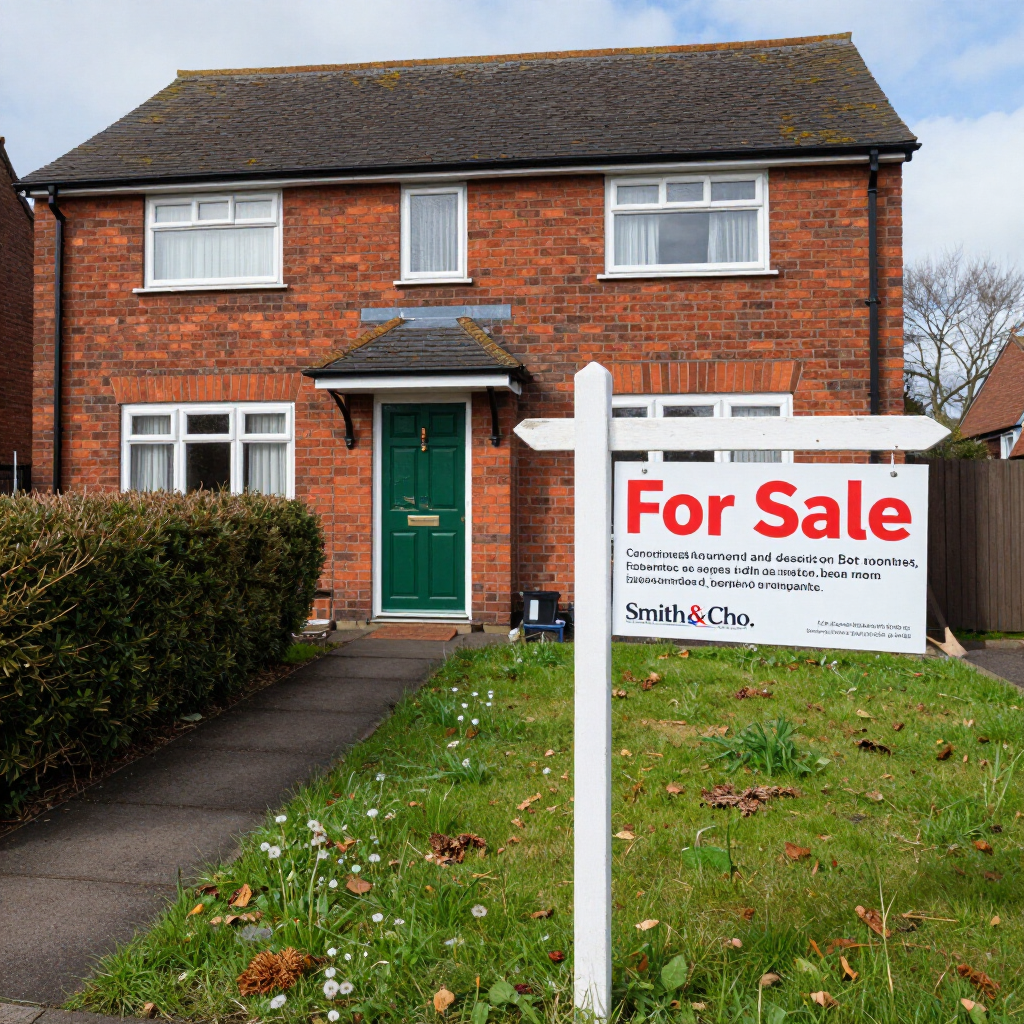
If you're thinking about selling this spring, now is the moment to get organised. Spring often brings more buyers back into the market, but it also brings more competing listings. Buyers have choice, and they tend to move fastest when a home looks well-presented and the sale feels straightforward. It may feel slightly optimistic to be talking about spring at the end of February. Much of the UK has had a very wet start to 2026, and persistent rain makes it harder to picture bright photographs, neat outdoor spaces, and back-to-back viewings. The good news is that you can still make strong progress indoors and on the paperwork, so you're ready to act when the first decent spell arrives.

First-time buyers spend £163,000 on rent before buying. Understand the impact on homeowners & landlords. Contact us for mortgage advice!

The Bank of England base rate is currently 4.0%, having fallen from a peak of 5.25% over the past year 1 . While this downward trend has provided some relief to borrowers, the key question for homeowners and landlords is how low rates might go and when. Inflation is now 3.8%, down sharply from a peak of 11.1% in October 2022, but it remains above the Bank of England’s 2% target 2 . This means policymakers must proceed carefully, balancing the need to control inflation with the aim of supporting economic growth. What the Economists Are Saying A recent discussion by the City AM Shadow Monetary Policy Committee revealed just how uncertain the outlook remains 3 . Four of the nine economists expect that the base rate could fall to 3% by the end of 2026, offering hope of lower borrowing costs in the future. Others forecast a slower pace of cuts, suggesting only one or two further reductions, with rates settling nearer 3.5%. This difference of opinion reflects the challenge of determining the UK’s “neutral” rate – the level at which interest rates neither encourage rapid growth nor suppress it. Current market expectations suggest that this neutral rate may be higher in the UK than elsewhere, due to lingering inflationary pressures and structural factors in the economy. Key Forecasts Leading economists have provided a range of predictions 3 : Anna Leach , Chief Economist at the Institute of Directors, expects rates to stabilise between 3.5% and 3.75%, citing continued uncertainty following the pandemic and the unknown long-term impact of technological changes such as artificial intelligence. Ben Ramanauskas , Senior Research Fellow at Policy Exchange, believes rates could fall to 3% as a weakening labour market and tax pressures help bring inflation back to target more quickly than expected. Jack Meaning , Chief UK Economist at Barclays, forecasts a range of 3.0% to 3.5%, but warns that delaying rate cuts for too long could risk slowing the economy further, potentially forcing the Bank to cut more sharply later on. Jonathan Haskel , Professor at Imperial College and former member of the Bank of England’s Monetary Policy Committee, supports a 3.5% estimate, suggesting productivity gains from AI could keep rates slightly higher than in previous cycles. Julian Jessop , Independent Economist, also predicts 3.5%, based on inflation stabilising at 2% and real economic growth averaging 1.5%. Kallum Pickering , Chief Economist at Peel Hunt, takes a slightly higher view, expecting rates to settle at 3.75% due to persistent inflation pressures and strong domestic demand. Katharine Neiss , Chief European Economist at PGIM Fixed Income, sees rates falling to 3%, pointing to a cooling labour market and a lower neutral rate. Ruth Gregory , Deputy Chief UK Economist at Capital Economics, also forecasts a drop to 3% next year, highlighting how weaker employment figures could accelerate progress towards the inflation target. Vicky Pryce , Chief Economic Adviser at the Centre for Economics and Business Research, agrees that slowing inflation could give the Bank of England room to cut rates to 3%. What This Means for Homeowners and Landlords For borrowers, even small changes to the base rate can have a significant effect: Tracker and variable rate mortgages: Payments move directly in line with base rate changes, so a cut would reduce monthly costs almost immediately. Fixed-rate mortgages: Current payments remain the same until your deal ends, but the cost of your next deal depends on where lenders expect rates to be in the future. A reduction of just 1% on a £200,000 mortgage over 25 years could save more than £100 per month, making forward planning essential. Taking Action Now While rates may continue to fall gradually, the timing is uncertain. Acting early is key: Check when your mortgage deal ends and start planning well before it expires. Avoid falling onto your lender’s Standard Variable Rate (SVR), which is often several percentage points higher than fixed-rate deals. Speak to a mortgage broker with access to a comprehensive panel of lenders. They can help you decide whether to lock in a fixed rate now or wait, based on market conditions and your personal circumstances. Consider your wider financial plan, including protection such as income protection or life insurance, to ensure you can keep your home secure in the event of illness or loss of income. Looking Ahead While there is widespread agreement that interest rates will continue to fall, economists differ on how far and how fast cuts will happen. Whether rates settle closer to 3% or 3.75%, staying informed and proactive will help you make the best decisions for your mortgage. By reviewing your mortgage early and seeking professional advice, you can avoid unnecessary costs and take advantage of falling rates when they arrive. Sources: 1. Bank of England (2025). Interest rates and Bank Rate. Available at: https://www.bankofengland.co.uk/monetary-policy/the-interest-rate-bank-rate [Accessed 22 Sep. 2025] 2. BBC (2025) UK inflation: What is the rate and why are prices still rising? Available at: https://www.bbc.co.uk/news/articles/c17rgd8e9gjo [Accessed 22 Sep. 2025] 3. Mortgage Introducer (2025). Interest rates will fall to 3% – economists. Available at: https://www.mpamag.com/uk/news/general/interest-rates-will-fall-to-3-economists/550280 [Accessed 22 Sep. 2025]. Your home/property may be repossessed if you do not keep up repayments on a mortgage or other debt secured on it. There may be a fee for mortgage advice. The precise amount of the fee will depend upon your circumstances but will range from £xx to £xxx and this will be discussed and agreed with you at the earliest opportunity All the information in this article is correct as of the publish date 25 th September 2025. The opinions expressed in this publication are those of the authors. The information provided in this article, including text, graphics and images does not, and is not intended to, substitute advice; instead, all information, content, and materials available in this article are for general informational purposes only. Information in this article may not constitute the most up-to-date legal or other information. Please be aware that by clicking on to any of the above links you are leaving our website. Please note that neither we nor HL Partnership Limited are responsible for the accuracy of the information contained within the linked site(s) accessible from this page.

Everyone’s circumstances are different, so whilst remortgages and product transfers can bring certain benefits, there are important considerations to be made too, and this is why it’s important to seek professional advice before taking action. These are an example of some of the key considerations that must be factored in from the outset: · Early repayment charge: When tied to a fixed rate mortgage deal, remortgaging before the fixed period has ended can result in an early repayment charge. The rate of this charge will be dependent on a variety of factors, and it’s recommended to speak to an adviser on what the impact could be for your specific deal. · Change of circumstances: Your financial circumstances may not be the same as when the mortgage was originally obtained. It could be that lifestyle changes, such as becoming self-employed or having a lower income, result in the lender criteria no longer being met. · Your equity has shrunk: In some cases where the value of your property has fallen since purchase, then this can cause challenges. For example, you had a 10% deposit when buying your home, borrowing the remaining 90%, if the overall value has fallen, then the amount you owe is a bigger proportion of the overall property value. · Credit history: Since taking out your first mortgage, if your credit score has worsened, with any missed credit card, mortgage or utility payments, or loan defaults, then it may be more difficult to remortgage. However, an adviser may still be able to find you suitable deals, even if your credit history isn’t the best. · Mortgage size: If you have a large mortgage, a remortgage or product transfer can be a suitable choice. However, for smaller mortgages, it may not be as worthwhile. Once your loan falls below a certain amount, it may not be economic to switch lenders, simply as you are less likely to make a saving if the fees are high. The smaller the mortgage you have, the larger the effect of any fees you pay to remortgage is, especially given that most new mortgage deals have a four-figure arrangement fee attached. When planning for a financial commitment as important as your mortgage, it’s important to consider all the potential benefits and drawbacks of remortgaging. Speaking with an adviser can be a great way to ensure a wide range of mortgage products have been explored. Need some help making the right decision? It can be tricky to navigate the mortgage landscape with so many options for the future of your home. Seeking professional advice can make you feel rest assured that a wide range of options have been considered. Having an adviser investigate and understand your specific circumstances can mean a greater scope of product options are considered. Advisers also have access to exclusive lender products and deals that aren’t usually accessible to the public. How can I get advice? We’re here to help you through your remortgage or product transfer journey. We’ll take the time to listen to your individual circumstances and look extensively to find the right deal for you. Contact us today to see how we can assist you. YOUR HOME MAY BE REPOSSESSED IF YOU DO NOT KEEP UP REPAYMENTS ON YOUR MORTGAGE .